
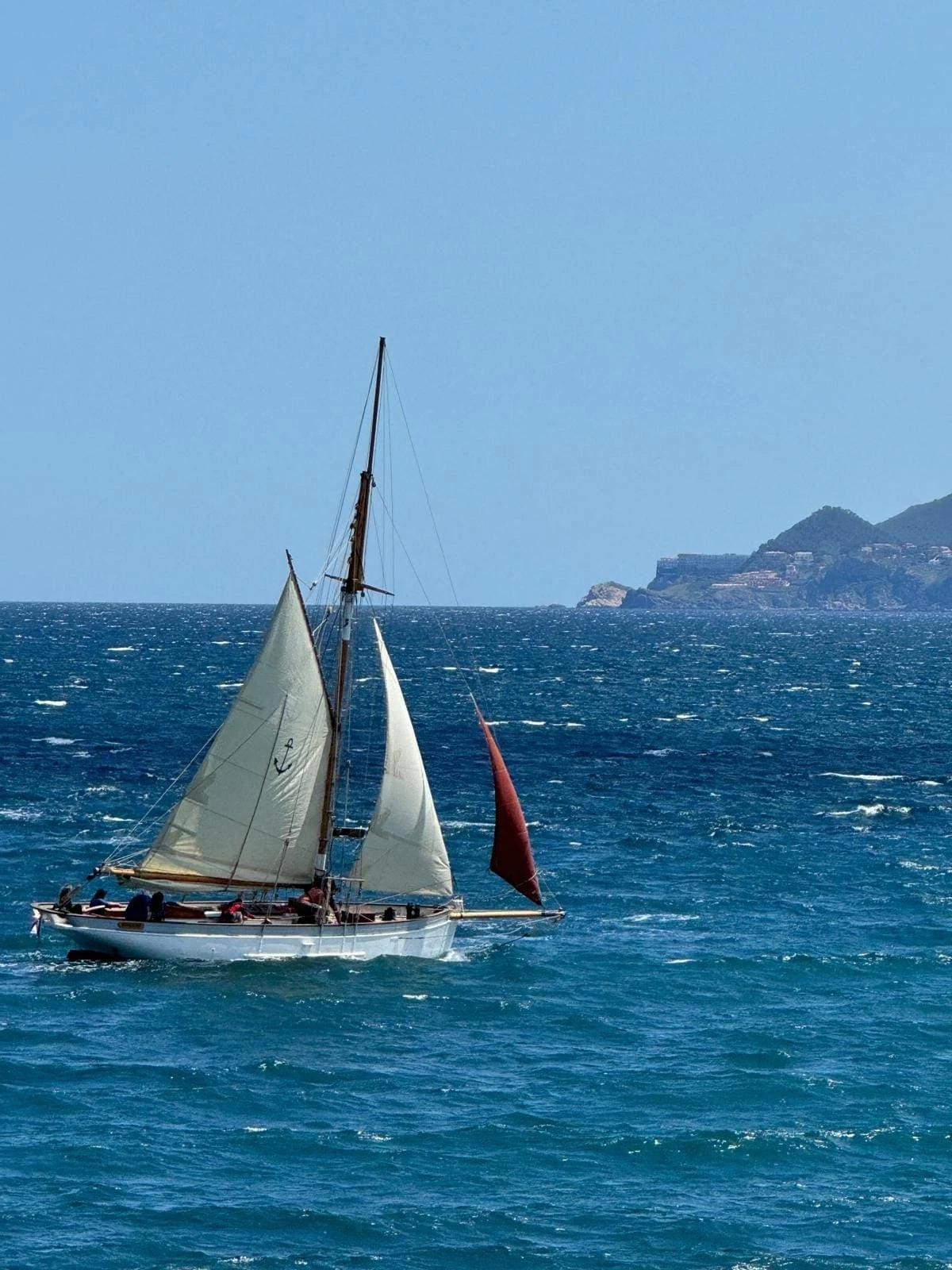
MADCAP 1874 / Pilot cutter
A story
in motion.
From the Bristol Channel to the Mediterranean.
A sailing vessel, lives, a heritage.
01 / Cardiff, Wales
1874Born to
set sail.
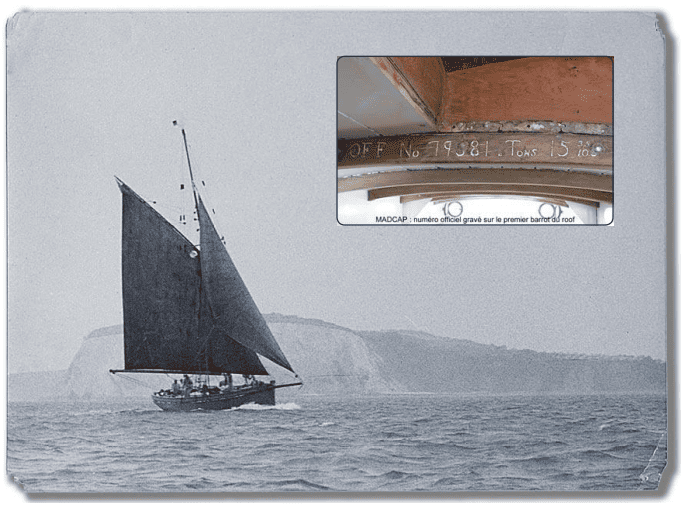
Reading the 'Cardiff Registered Ships' tells us that Williams Stephens, born in 1830 in Cardigan (Wales) and a sailor by trade, carried out several piloting operations in Cardiff Bay aboard pilot boat No. 11, named MADCAP, between November 20 and December 30, 1874.
Built in 1874 by the Davies & Plain shipyard at Bute East Dock, Cardiff, Wales, Madcap was officially listed in 1879 in the “Alphabetic List of British Registered Sailing Vessels” under registration No. 79381. Its owner at the time was William Jenkins, of 39 Adelaide Street, Cardiff.
Originally intended for Cardiff Harbour’s pilotage service, Madcap was designed for the demanding conditions of the Bristol Channel, known for its powerful tides and strong currents.
The vessel is 16.54 metres long and 3.76 metres wide, with a straight stem and a counter stern. Its sail area is 116 m². Its structure comprises an elm keel and planking, transverse oak framing, and Oregon pine topsides and deck. For stability, it carries 8 tonnes of ballast—2 tonnes of lead and 6 tonnes of concrete—bringing its total weight to 24 tonnes.
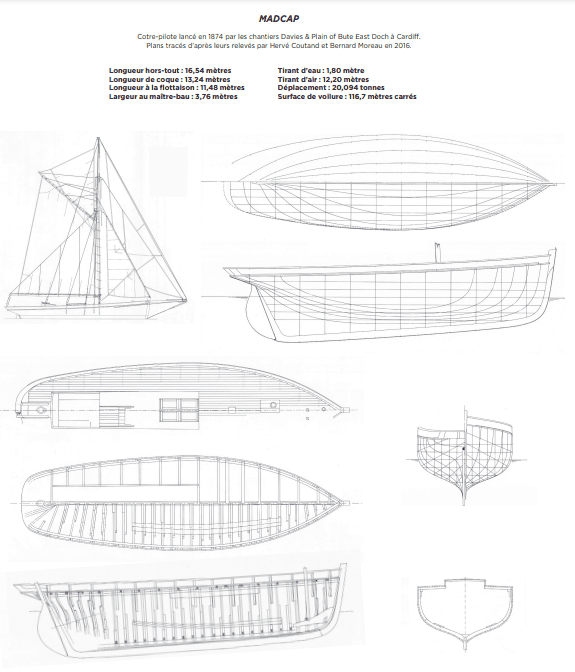 Enlarge the plan ↗
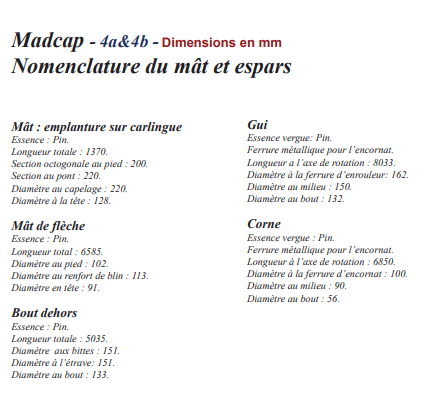 Enlarge the document ↗
02 / The Bristol Channel
First
on the horizon.
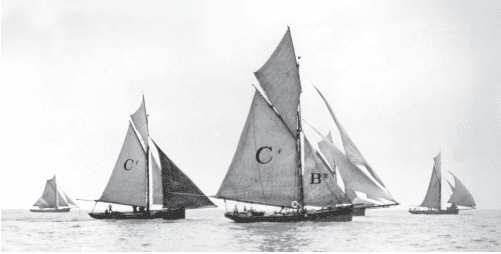
At the end of the 19th century, Cardiff, Newport and Swansea were among the world’s largest coal ports, and maritime trade flourished there. Pilot cutters such as Madcap were essential for guiding ships approaching through these perilous waters.
Piloting in the Bristol Channel was competitive. Several cutters waited offshore, and when a merchant ship appeared on the horizon, a race began to reach it first. The winning pilot earned the right to escort the ship into port, a highly paid task.
These cutters were designed to be fast and highly manoeuvrable. Their crews usually numbered two or three sailors, including a cabin boy. His role was crucial: he had to row out to the waiting ship to deliver the pilot, then return alone in the cutter.
Madcap's first skippers
The archives reveal several skippers who sailed aboard Madcap.
- 1874Williams Stephens
First known skipper
- 1878William Jenkins
In service from 1878
- 1913William Henry Howe
Owner until 1913; his wife then inherited the pilotage title.
- 1920sJames Andrew Burgan
Madcap's last pilot
Life aboard in the 19th century
Men.
Facing the sea.
Training to become a pilot began at the age of 14, after spending several years as a deckhand starting at age 11. Following a lengthy apprenticeship of about ten years, a pilot could finally command his own cutter and practise this prestigious trade.
Pilot cutters on the Bristol Channel were designed to be handled by just two or three men, including a young, often inexperienced deckhand. These intrepid sailors spent long hours at sea, facing howling winds and punishing waves that rocked their frail vessel. Sometimes they sailed for days with no guarantee of success, at the mercy of the channel’s violent currents and fickle tides. Bitter cold, unrelenting rain and damp that seeped everywhere were part of daily life. Breakages were common: vessels battered, sails torn and spars broken by the elements. Yet they had to press on, as every race to a merchant ship meant a chance to earn a reward, and speed and mastery of the boat could determine success or failure.
A pilot's words
« Lors des embarquements de nuit dans des conditions de gros temps, nous étions toujours soulagés de voir le canot revenir à bord. »Read his account of rough weather +
«Nous prîmes un ris dans la grand-voile, et décidâmes de courir rapidement vers le canal. Vers les 8 heures du soir, nous avions amené complètement la grand-voile, arrisé encore la trinquette et nous mîmes à la cape. Nous étions alors entre les pointes Nash et Foreland […]. À 10 heures du soir, le pilote est sorti et le vent semblait encore fraîchir, avec de violentes rafales et une mer confuse, il me dit de relever la barre et de faire route pour Barry Roads. Juste avant minuit, il me demanda de faire une tasse de thé et d’appeler mon équipier. Je m’exécutai et juste au moment où je revenais vers le cockpit avec la tasse, j’entendis un crack. Quand je sortis, je vis que la bôme s’était brisée en deux comme une carotte. La voile et le bout de la bôme étaient à l’eau et la grand-voile en lambeaux. Nous avons eu du mal à récupérer les pièces brisées à bord, et, une fois tout sécurisé, nous faisions route vers Pill, parce que nous devions demander une nouvelle grand-voile et une bôme. Arrivés là-bas, nous apprîmes que le Manxman était au niveau de King Road et demandait l’aide d’un pilote. Nous n’avions pas seulement perdu une voile et une bôme, mais aussi un bon navire qui payait bien.»Inside Madcap
Another view
of life aboard.
03 / The transition to pleasure sailing
Other lives.
Other horizons.
In the 1930s, after several decades as a pilot cutter, Madcap was converted into a pleasure craft. Over the years it changed owners and sailed mainly between Ireland and Brittany, with voyages to the Mediterranean, the Azores and as far as Greenland. In 1996 it joined the UK National Historic Fleet, a distinction reserved for exceptional British sailing vessels.
- 1936
John Burfield
A Royal Navy commander, he modernised Madcap by adding an engine.
- 1993
Adrian « Stu » Spence
An Irish lawyer and owner in 1993, he sailed Madcap to Greenland and the Azores.
- 1996
National Historic Fleet
Madcap joined the United Kingdom's National Historic Fleet, an honour reserved for exceptional British sailing vessels.
- 1998
Douarnenez
During the Douarnenez celebrations, Madcap received the award for the most beautiful boat of the previous century.
- 2015–2020
Olivier Guillemin
Owner from 2015 to 2020, he undertook a restoration faithful to the original.
04 / 2015 · La Rochelle
Preserve.
To keep sailing.
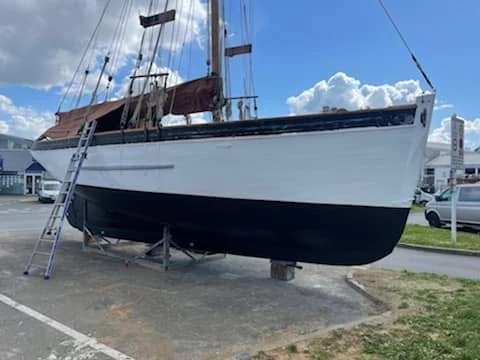
In 2015, Madcap was transferred to the Despierres shipyard in La Rochelle, a renowned yard for restoring heritage vessels. Over several months, it underwent a full refit intended to preserve its authenticity. Shipwrights replaced some damaged frames and floor timbers, while the counter stern and part of the hull planking were rebuilt in oak and elm, respecting the original materials. The rig was also restored to its traditional configuration. The work led to its listing as a Historic Monument in France, in recognition of its heritage value and importance to maritime history.
05 / A new life in the Mediterranean
The story
is passed on.
Madcap underwent renovation at the Bernadou yard: its stern was rebuilt in oak and elm, respecting the original wood species.
The Madcap 1874 association develops its social programmes, promoting access to sailing for diverse audiences and passing on maritime heritage.
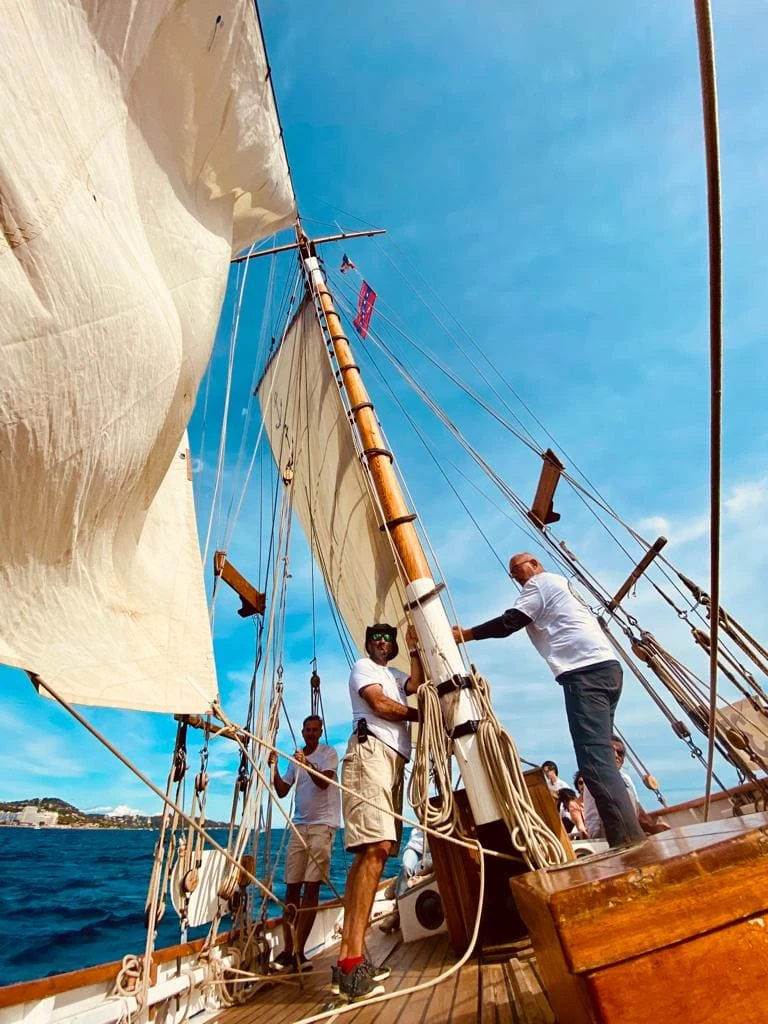
Madcap is a living testimony to maritime heritage, sailing to share its history and perpetuate the legacy of pilot cutters. At 150 years old in 2024, Madcap is the oldest of the 17 pilot cutters still sailing today. Madcap's story is that of an extraordinary boat that has weathered the ages and continues to carve its wake across the oceans. Whether as a fast and competitive pilot cutter or as a pleasure craft, its destiny is closely tied to the sea and those who cherish it.
Madcap reached the Mediterranean in 2022. The Madcap 1874 association was founded on 21 November 2021.
MADCAP 1874